

The Australian dollar has been sliding against the US dollar, and anyone depositing in crypto or a USD-priced cashier is quietly getting less for the same AUD balance. It's not a headline most players track, but it shows up the moment a deposit converts.
Why the Exchange Rate Shows Up at the Cashier at All
Most Australian casino players never think about exchange rates, because most deposits stay in Australian dollars from cashier to withdrawal. That changes the moment a site prices its cashier, its bonuses, or its crypto conversion in US dollars instead, which a fair number of offshore-facing operators still do. When that happens, the AUD to USD rate stops being background financial news and starts directly deciding how far a deposit stretches.
The rate has been moving lately, and not in the Aussie dollar's favour. A weaker AUD means every dollar deposited converts to fewer US dollars on the other side, which matters most on sites where the minimum deposit, the bonus threshold, or the maximum bet limit is set in USD rather than local currency. A A$100 deposit that used to clear a bonus minimum priced in US dollars might now fall just short of it, purely because the rate shifted between logging in last week and depositing today.
X3Bet is one of the sites where cashier limits are listed in both currencies side by side, which makes the conversion visible before a deposit goes through rather than after. That's the detail worth hunting for on any site: whether the numbers on the promotions page match the currency the deposit is actually made in, or whether there's a silent conversion step sitting between the two.
It's a small thing that gets overlooked easily, especially by players used to everything staying in AUD end to end. Checking which currency a site actually quotes its terms in takes thirty seconds on the cashier page, and it's thirty seconds that can save a deposit from landing just under a bonus threshold nobody meant to miss.
Crypto Deposits Take the Hit Twice
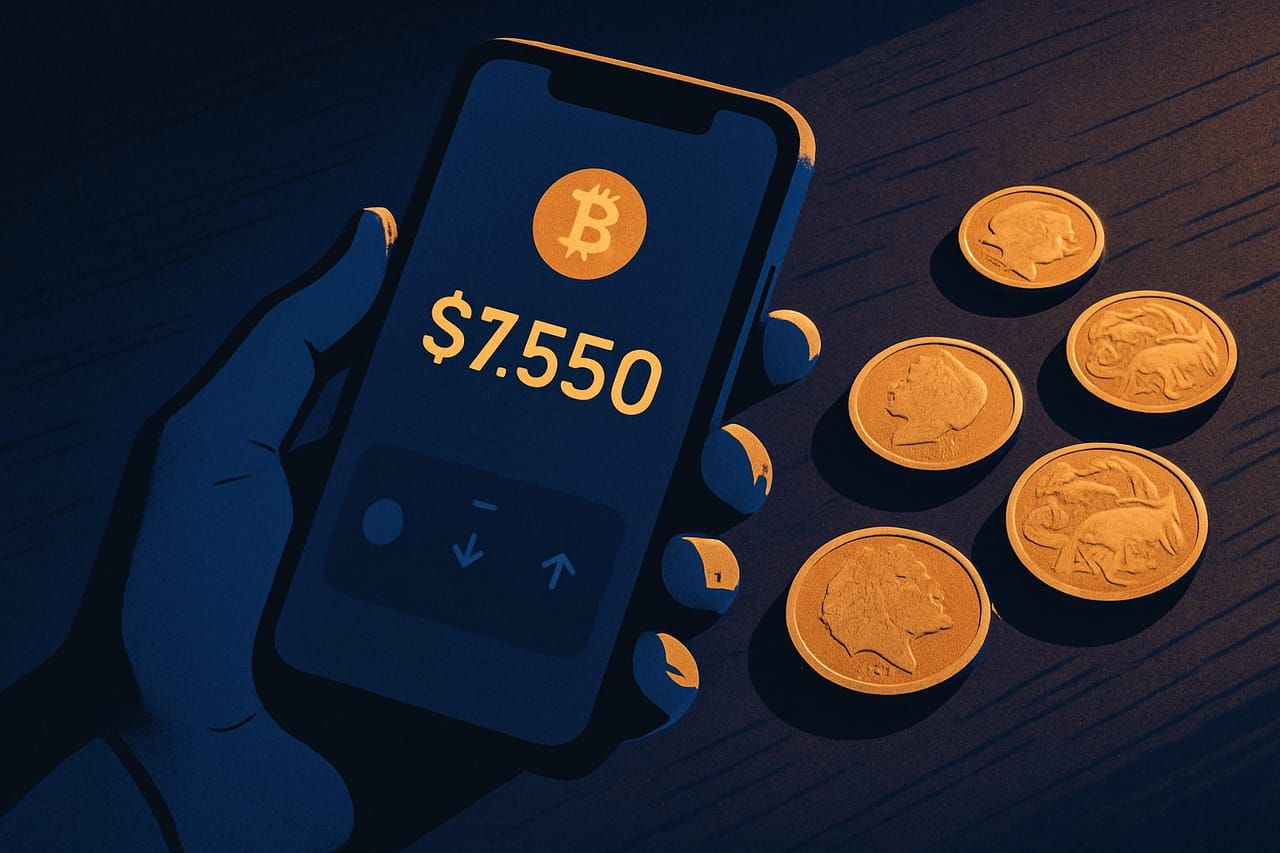
Crypto deposits add a second conversion on top of the currency one, and that's where the exchange rate swing gets felt hardest. A player converting AUD to a stablecoin or to Bitcoin is really doing two conversions back to back: AUD to USD, then USD or its equivalent to the crypto asset, and both legs move independently of each other. A weaker Aussie dollar means the first leg already buys less, before the crypto price itself moves at all.
That compounding effect is easy to miss because it happens instantly and invisibly inside whatever exchange or on-ramp handles the conversion. A deposit that would have bought a certain amount of Bitcoin a month ago might buy noticeably less today, not because Bitcoin's price changed, but because the AUD converted to fewer US dollars first. For a player tracking bankroll in AUD terms, the number on the casino balance can look smaller than expected even though nothing about the casino itself changed.
Drakaris accepts several crypto assets directly at deposit, and like most crypto-friendly operators, it converts at the network rate at the moment the transaction confirms, not at some fixed daily rate. That timing matters: confirming a deposit during a volatile hour for either AUD/USD or the crypto asset itself can shift the final balance by a noticeable margin either way.
The practical fix isn't complicated. Checking the live AUD/USD rate and the crypto price at the moment of deposit, rather than assuming yesterday's numbers still hold, avoids the surprise of a smaller-than-expected balance landing in the account after conversion.
Bonus Math Doesn't Stay the Same When the Rate Moves
Welcome bonuses are usually advertised as a percentage match, and percentages don't care about exchange rates on the surface. A 100% match on a A$200 deposit is still A$200 in bonus funds regardless of what the AUD is doing against the US dollar. The rate starts mattering the moment the fine print references a USD figure, which shows up more often than players expect on sites built around a global, USD-first back end.
Maximum bonus caps are the most common place this shows up. A cap listed as an amount in US dollars converts to a different AUD figure every time the rate shifts, and a weaker Aussie dollar means that same cap now requires a larger AUD deposit to actually reach it. A player aiming to max out a bonus based on last month's conversion might deposit the same AUD amount today and land short of the ceiling, through no fault of their own math.
Wagering requirements compound this further. A 40x wagering requirement on a USD-denominated bonus calculates the playthrough target in USD before converting back, so the same percentage match can translate into a higher or lower AUD wagering target depending on where the rate sits that day. It's not a huge swing on any single bonus, but across a deposit-and-bonus routine repeated weekly, the drift adds up.
None of this means bonuses are worse than advertised. It means the advertised number and the number that actually lands in an AUD-denominated account aren't always identical, and checking which currency the terms are actually written in avoids chasing a cap that shifted since the promo page was last updated.
Where the Conversion Actually Costs You
Beyond the headline rate, there's usually a spread built into whatever converts the deposit, and that spread is where a chunk of the real cost sits. Payment processors and crypto exchanges rarely convert at the exact mid-market rate quoted on financial news sites; they add a margin, typically somewhere between 0.5% and 2%, and that margin comes straight out of the deposit before it even reaches the casino balance.
That spread is invisible on the casino's own cashier page, because the casino is just receiving whatever amount lands after the conversion happens upstream. It's the payment provider or crypto on-ramp taking the cut, not the operator, which is part of why it's easy to overlook. A A$200 deposit converted through a provider with a 1.5% spread lands as roughly A$197 worth of value on the other side, before any casino terms even apply.
Card and e-wallet deposits usually carry a smaller spread than crypto on-ramps, since most major providers compete hard on that margin to stay attractive. Crypto exchanges vary more widely, and a lesser-known on-ramp used purely for a casino deposit can carry a spread well above the 2% mark without advertising it clearly.
The way to see it is to check the exact amount that lands in the casino balance against the AUD amount actually sent, rather than trusting the advertised rate on the sending side. That gap, whatever it turns out to be, is the real cost of the conversion, separate from anything the casino itself charges or offers.
What to Check Before You Hit Deposit
None of this requires tracking currency markets daily. It requires one habit: before a deposit that involves any currency conversion, whether that's a USD-denominated bonus cap or a crypto on-ramp, check the actual AUD figure that will land, not the advertised one from a promo page that might be weeks old.
That means glancing at the current AUD/USD rate, checking whether the site's terms are quoted in AUD or USD, and, for crypto deposits, checking the on-ramp's quoted rate against the mid-market rate before confirming. It takes under a minute and it's the difference between a deposit that clears a bonus threshold and one that falls just short of it because the rate moved since the last visit.
For players depositing in AUD to a site that keeps everything in AUD end to end, none of this changes anything, and that's worth checking first: a site with local currency support throughout removes the conversion question entirely.
The larger point is that a sliding Aussie dollar isn't a reason to sit out. It's a reason to read the cashier page a little more carefully before depositing, the same way a shopper checks the exchange rate before booking an overseas hotel. The deposit still buys a session either way, it just buys a slightly different one depending on when it's made.
Before your next deposit, check whether the site's bonus terms and cashier limits are quoted in AUD or USD, and glance at the live AUD/USD rate if crypto's involved: thirty seconds now beats a bonus cap missed by a few dollars later.